
A vibration dampener is the small piece of rubber that many players push between the strings near the bottom of the racket head. It is cheap, colourful and almost universal at club level — but it is also one of the most misunderstood accessories in tennis.
What a dampener does — and what it doesn't
When the ball hits the strings, two kinds of vibration occur:
- String vibration: fast, high-pitched vibration of the string bed that creates the "ping" sound and a slightly buzzy feel. A dampener absorbs most of this.
- Frame vibration and shock: the slower, much stronger vibration of the frame itself, felt in the hand and arm, especially on off-centre hits. A dampener barely affects this.
So a dampener changes the sound and the feel of the strings, but it does little to protect your arm.
Where to put it: what the rules say
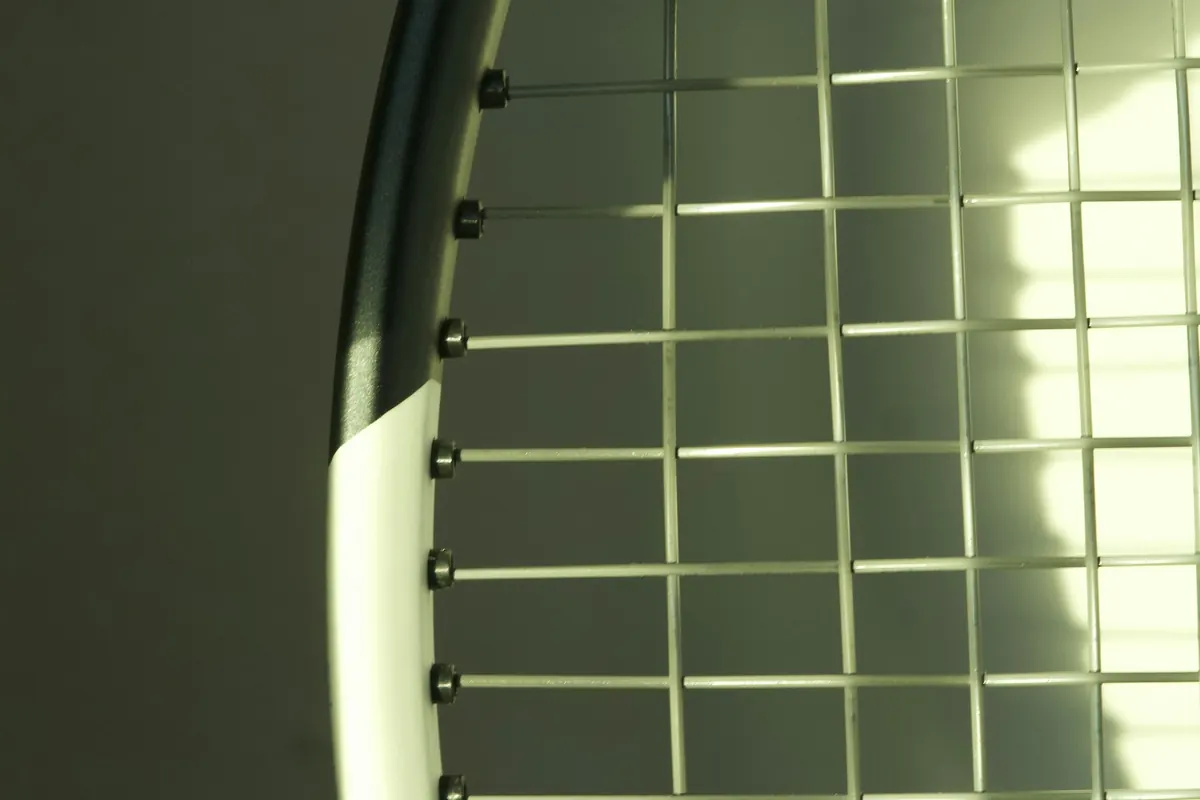
The rules of tennis allow vibration dampeners, but only outside the pattern of crossed strings. In practice that means between two of the central main strings, below the last cross string at the throat end of the racket.
Tip: place it close to the last cross string, between the two centre mains. If it slides into the hitting area during play, push it back — a dampener inside the string bed is not allowed.
Types of dampener
| Type | Where it sits | Effect |
|---|---|---|
| Button (logo) dampener | Between the two centre mains | Removes the "ping"; small change in feel |
| Worm / long dampener | Woven across several main strings | More damping; more muted feel |
| No dampener | — | Maximum feedback and string sound |
Dampeners and tennis elbow
Many players add a dampener hoping to protect their elbow. Unfortunately, the forces that load the tendons come from the impact and the frame, not from the high-frequency string vibration a dampener removes. If you have arm pain, these changes matter far more:
- Softer strings — multifilament or natural gut instead of stiff polyester.
- Lower string tension.
- A more flexible racket with a moderate weight; very light rackets transmit more shock.
- The right grip size so you don't squeeze — see the grip size guide.
- Technique: hitting in front and relaxing the hand.
Full details in our tennis elbow racket and string setup. Pain that persists needs a medical opinion.
Should you use one?
- Yes, if you dislike the string "ping" or prefer a slightly more muted feel.
- No, if you like maximum feedback from the strings — many players judge their contact by the sound.
- Either way, it won't change your power or spin in any meaningful way.
Try playing a set with and without one: the choice is entirely yours. For changes that really affect how your racket plays, start with the tennis strings guide and the string tension chart.
Frequently asked questions
Do tennis dampeners actually work?
They do what they are designed for: they absorb the high-frequency vibration of the strings that creates the 'ping' sound and a buzzy feel. They do not meaningfully reduce the larger shock that travels through the frame into your arm.
Where do you put a vibration dampener?
Between the main strings at the throat end of the string bed, below the last cross string. The rules of tennis require it to be placed outside the pattern of crossed strings.
Does a dampener help tennis elbow?
Not much. The vibration that matters for the elbow comes from the frame and the impact, which a small dampener barely changes. Softer strings, lower tension, a heavier and more flexible racket, the right grip size and good technique help far more.
Should beginners use a dampener?
It is purely a matter of preference. Some players like the muted sound and softer feel; others prefer the feedback of an undampened string bed. It will not make your strokes better or worse.