
String tension is the setting most players never touch — and one of the easiest ways to change how a racket feels. A few pounds can turn a racket that sprays balls long into one that feels controlled, or make a harsh setup kind to your arm. This page gives you a starting point, a chart you can use at the stringer, and simple rules for adjusting from there.
The short answer
Start in the middle of the tension range printed on your racket (on the throat or inside the frame). For most adult rackets that range sits somewhere between 50 and 60 lb (23–27 kg), so a middle value of around 53–56 lb (24–25.5 kg) is a sensible first string job with a multifilament or synthetic gut. If you use polyester, go 2–4 lb lower.
From there, adjust by feel: if the ball flies long, go up; if the racket feels dead, harsh or underpowered, go down.
Tennis string tension chart
These are typical starting points, not rules. Your racket's recommended range always takes priority.
| String type | Typical range (lb) | Typical range (kg) | Good starting point |
|---|---|---|---|
| Natural gut | 52–60 | 23.5–27 | 55 lb / 25 kg |
| Multifilament | 50–58 | 22.5–26.5 | 54 lb / 24.5 kg |
| Synthetic gut | 50–58 | 22.5–26.5 | 54 lb / 24.5 kg |
| Hybrid (poly mains, soft crosses) | 48–56 | 22–25.5 | 52 lb / 23.5 kg |
| Polyester (full bed) | 44–54 | 20–24.5 | 50 lb / 22.5 kg |
What tension actually changes
Lower tension
- More power: the string bed deforms more and returns more energy to the ball.
- More comfort: less shock reaches the arm.
- Bigger effective sweet spot: off-centre hits are punished less.
- Less control: the launch angle rises, so full swings can land long.
Higher tension
- More control: a firmer bed sends the ball on a flatter, more predictable path.
- Less power and comfort: you need a faster swing to get depth, and the arm feels more.
- Crisper feel on volleys and flat shots for many players.
Rule of thumb: each change of 2 lb (about 1 kg) is noticeable to most club players. Move in small steps and keep a note of what you used — on a strip of tape on the throat, for example.
Adjusting for your situation
| Situation | Adjustment |
|---|---|
| Balls flying long, too much power | +2 lb (+1 kg) |
| Racket feels harsh, dead or underpowered | −2 lb (−1 kg) |
| Arm, elbow or wrist discomfort | −2 to −4 lb and a softer string |
| Switching from multifilament to polyester | −2 to −4 lb |
| Hot weather or high altitude (ball flies more) | +1 to +2 lb |
| Cold weather (ball feels dead) | −1 to −2 lb |
| Open pattern (16×19, 16×18) vs dense (18×20) | Dense patterns often play firmer: consider −1 to −2 lb |
If you have arm problems, combine a lower tension with a soft string — see our arm-friendly setup guide.
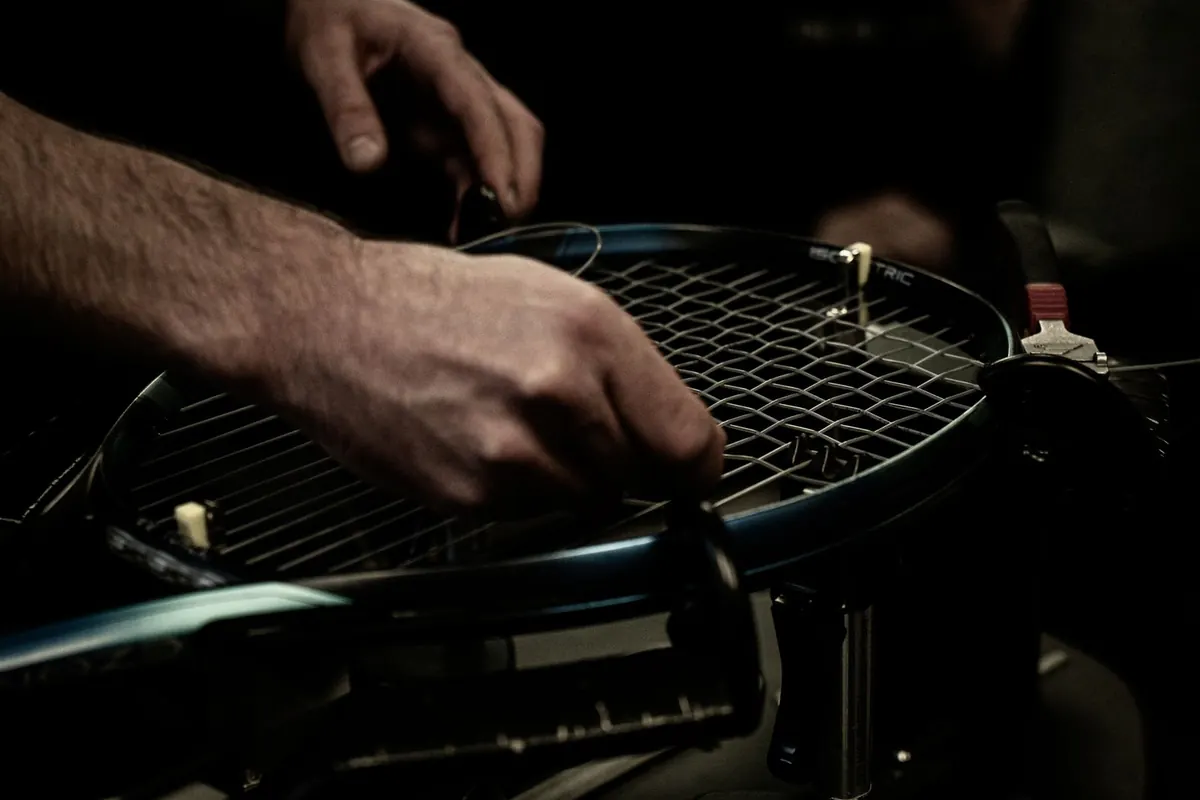
Mains and crosses
Most players string mains and crosses at the same tension. Some stringers set the crosses 1–2 lb lower, because cross strings are shorter and naturally feel stiffer. In a hybrid, players often string the stiffer material (usually the polyester) slightly lower than the softer one. If you are unsure, ask for the same tension on both — consistency matters more than fine-tuning.
Tension loss: why your strings feel different after a week
All strings lose tension after stringing, most quickly in the first day. Polyester loses tension and elasticity faster than multifilament or gut and can feel noticeably "dead" after a few weeks of regular play, even without breaking. That is why the same reference tension can feel different from one string to another, and why regular restringing matters. Our guide on how often to restring explains the signs.
lb to kg conversion
| lb | kg | lb | kg |
|---|---|---|---|
| 44 | 20.0 | 54 | 24.5 |
| 46 | 20.9 | 56 | 25.4 |
| 48 | 21.8 | 58 | 26.3 |
| 50 | 22.7 | 60 | 27.2 |
| 52 | 23.6 | 62 | 28.1 |
To convert yourself: kg = lb × 0.4536, and lb = kg × 2.2046.
Strings matter as much as tension
Tension and string type work together. A soft multifilament at 56 lb can feel more comfortable than a stiff polyester at 50 lb. If you are changing both, change one thing at a time so you know what made the difference. Our tennis strings guide compares the main types, and you can find strings and string kits from partner shops here:
Frequently asked questions
What is a good string tension for beginners?
Most beginners do well in the middle of the racket's recommended range — often around 52–55 lb (23.5–25 kg) with a synthetic gut or multifilament string. It gives a forgiving balance of power, comfort and control.
Should I string polyester lower?
Yes, as a rule. Polyester is much stiffer than other strings, so most players string it 2–4 lb (about 1–2 kg) lower than they would a multifilament to keep the string bed playable and easier on the arm.
Does higher tension give more spin?
Not directly. Spin depends mostly on string type, string pattern and swing speed. Lower tensions can actually let the strings move and snap back a little more, which some players find helps spin.
How do I convert string tension from lb to kg?
Multiply pounds by 0.4536. For example, 55 lb is about 24.9 kg and 50 lb is about 22.7 kg. Many stringing machines show both units.