
Four tournaments stand above everything else in tennis: the Australian Open, Roland-Garros, Wimbledon and the US Open. Together they are called the Grand Slams, or simply the majors. They carry the most ranking points, the biggest prize money and the most history — and they shape the whole season around them.
The four majors at a glance
| Tournament | City | When | Surface | First held |
|---|---|---|---|---|
| Australian Open | Melbourne | January | Hard (acrylic) | 1905 |
| Roland-Garros (French Open) | Paris | Late May – early June | Red clay | 1891 (open to international players from 1925) |
| Wimbledon | London | Late June – July | Grass | 1877 |
| US Open | New York | Late August – September | Hard (acrylic) | 1881 |
The surface changes the game dramatically — slow, high-bouncing clay in Paris, fast, low-bouncing grass in London. Learn why in tennis court surfaces explained.
What makes a Grand Slam different
- Draw size: 128 players in the singles main draw, so the champion wins seven matches.
- Best-of-five: men's singles matches are played over five sets; women's over three.
- Two weeks: each major runs for about two weeks, plus a qualifying tournament the week before.
- Ranking points: 2,000 points for the champion, the most of any regular event. See tennis rankings explained.
- Every event: men's and women's singles and doubles, mixed doubles, juniors and wheelchair events.
Australian Open
The first major of the year opens the season in the Melbourne summer. Played on blue hard courts at Melbourne Park, it is known for extreme heat, night sessions that run into the early hours and stadiums with retractable roofs. Its fast start to the year makes it a target for players who prepared well in the off-season.
Roland-Garros
The only major on clay. The red crushed-brick surface slows the ball and produces high bounces, rewarding patience, topspin and physical endurance. It is often called the most physically demanding Grand Slam to win, and it has produced some of the longest winning streaks in the sport.
Wimbledon
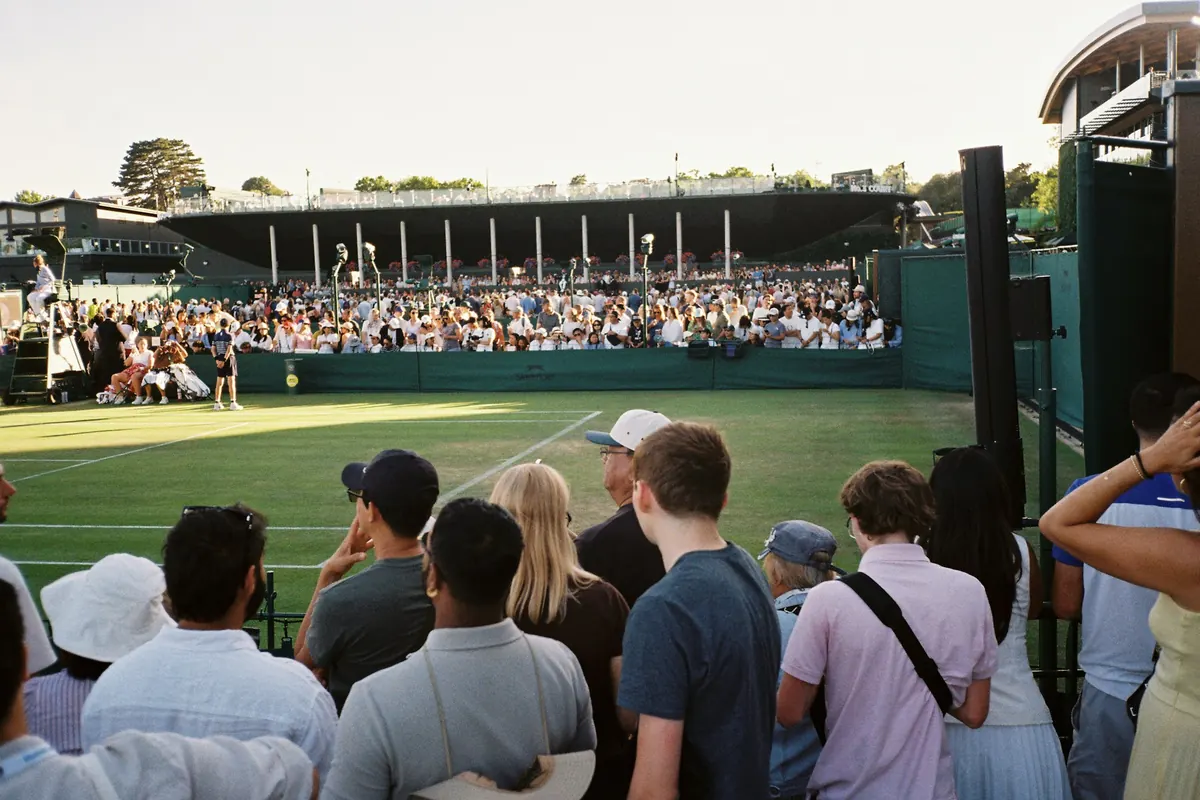
The oldest tennis tournament in the world and the only major on grass. The ball stays low and skids, rewarding big serves, slices and net play. Wimbledon keeps its traditions: an almost entirely white dress code for players, strawberries and cream, and the famous queue for tickets.
US Open
The final major of the year, played at the USTA Billie Jean King National Tennis Center in New York. Its fast hard courts, loud night sessions in Arthur Ashe Stadium — the largest tennis stadium in the world — and late-summer heat make it the most energetic of the four.
Final-set tiebreaks: one rule for all
Each major used to have its own rule for deciding the final set, from no tiebreak at all to a tiebreak at 12-12. Since 2022, all four use the same format: a 10-point tiebreak when the final set reaches 6-6. Details in our tiebreak rules guide.
The "Grand Slam" and the "Career Grand Slam"
- Calendar Grand Slam: winning all four majors in the same year — achieved only a handful of times in singles history.
- Career Grand Slam: winning each of the four majors at least once over a career.
- Golden Slam: all four majors plus the Olympic gold medal in the same year — achieved once in singles, by Steffi Graf in 1988.
Where the majors fit in the season
| Months | Swing | Major |
|---|---|---|
| January | Australian summer hard courts | Australian Open |
| February – March | Indoor and outdoor hard courts | — |
| April – early June | European clay | Roland-Garros |
| June – July | Grass | Wimbledon |
| July – September | North American hard courts | US Open |
| October – November | Asian and indoor events, season finals | — |
See how the rest of the calendar is organised in tennis tournament categories explained, and follow every match of the majors on our live scores.
Frequently asked questions
What are the four Grand Slam tournaments?
The Australian Open (Melbourne, January), Roland-Garros or the French Open (Paris, late May–June), Wimbledon (London, late June–July) and the US Open (New York, late August–September).
Why are they called Grand Slams?
Winning all four in the same calendar year is called 'the Grand Slam', a term borrowed from the card game bridge. Over time the four tournaments themselves became known as the Grand Slams or majors.
How many ranking points is a Grand Slam worth?
The singles champion earns 2,000 ranking points on both the ATP and WTA tours — twice as many as a Masters 1000 or WTA 1000 title. Points decrease round by round for players who lose earlier.
Do women play best-of-five at Grand Slams?
No. In singles, men play best-of-five sets and women best-of-three at all four Grand Slams.