
A good tennis shoe does three jobs: it grips when you push off, releases (or slides) when you need to stop, and holds your foot stable through sharp changes of direction. How it achieves that depends heavily on the court. A clay court is loose and slippery, a hard court abrasive and grippy, grass soft and slick. That is why the same brand often sells the same shoe with two or three different outsoles.
The quick answer
| Surface | Outsole | Priority |
|---|---|---|
| Clay (red or green) | Full, deep herringbone | Controlled sliding, clay release |
| Hard court | Modified herringbone, durable rubber | Durability, cushioning |
| Grass | Small rubber nubs (pimples) | Traction without damaging the turf |
| Indoor carpet / textile | Smooth or lightly patterned | Low grip to avoid sticking |
| Artificial grass with sand | Omni / clay or nub outsole | Grip on sand-filled turf |
| Several surfaces | All-court (hybrid pattern) | Versatility |
Clay court shoes
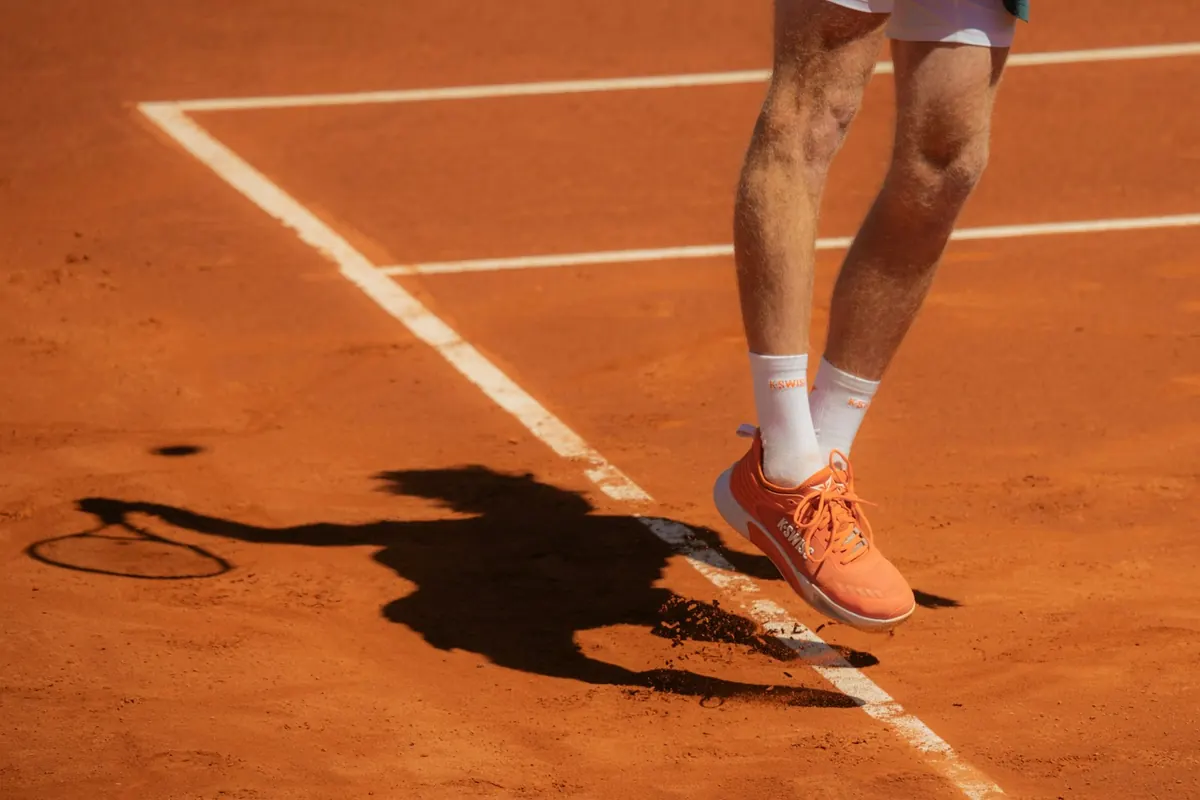
On clay, players slide into many shots. The shoe should let you slide in a controlled way and then bite again for the next push-off. Clay shoes use a full herringbone (zig-zag) pattern across the entire sole. The deep grooves grip the loose surface while letting clay fall out rather than clogging the sole, which would turn it into a skating boot.
- A snug, supportive upper matters — sliding puts strong lateral forces on the foot.
- Clay is gentle on rubber, so clay soles usually outlast hard-court soles, but the upper can wear first.
- Tap the soles against the fence after play and let damp shoes dry naturally, away from heaters.
Hard court shoes
Hard courts (acrylic-coated concrete or asphalt) are grippy and abrasive. The biggest issue is wear: an outsole can be visibly smooth after a few months of regular play. Hard-court shoes therefore use thicker, harder-wearing rubber, often with a modified herringbone pattern and reinforced zones at the toe and the inside of the forefoot, where players drag and pivot.
- Cushioning matters more than on soft surfaces, because the court does not absorb impact.
- Look for a toe guard if you drag your back foot on the serve.
- Some brands offer an outsole durability guarantee on certain models — worth checking if you wear through soles quickly.
Grass court shoes
Natural grass is slippery, especially early in the day or after rain, and easily damaged. Grass shoes use many small rubber nubs that grip the surface without tearing it. Many clubs with grass courts make them compulsory or at least ban aggressive tread. Grass-court shoes are a specialist purchase: if you only play a handful of times on grass each year, ask the club whether flat-soled shoes are accepted.
Indoor courts
Indoor surfaces vary. On fast carpet or textile courts, a grippy hard-court sole can stick and twist the knee or ankle; a smoother "indoor" or carpet outsole is safer. On indoor hard courts, normal hard-court shoes are fine. On indoor clay (or synthetic clay), use clay shoes. If you are unsure, ask the club — many indoor centres specify the shoe type, and some require non-marking soles.
Artificial grass and "omni" courts
Sand-filled artificial grass is common in parts of Europe and the UK. It behaves a bit like clay: the loose sand on top favours a herringbone or dedicated "omni" outsole, sold as "clay/omni" in some ranges. Hard-court soles can feel skiddy on it.
All-court shoes: one pair for everything?
All-court shoes mix herringbone with other patterns so they work acceptably on hard courts and clay. For recreational players who switch surfaces, they are a sensible single pair. If you play mostly on one surface, a dedicated shoe will perform better and, on hard courts, usually last longer.
Tip: try shoes on in the afternoon, with the socks you play in. Feet swell during the day and during play. Leave roughly a thumb's width at the toe, and make sure the heel does not lift when you move sideways.
Beyond the outsole: fit, stability and cushioning
Stability vs speed
Tennis shoes range from stable, supportive models (wider base, firmer upper, more structure around the heel) to lightweight, speed-oriented models. Heavier players and those with a history of ankle sprains usually do better with stability-focused shoes; light, fast movers may prefer speed models.
Width and foot shape
Some models are available in wide fits. If a shoe pinches at the sides of the forefoot, it will only feel worse after an hour of lateral movement.
Cushioning
More cushioning is welcome on hard courts and for players with joint concerns, but very soft, high cushioning can reduce stability. Tennis shoes are lower and firmer than running shoes for good reason.
When to replace your tennis shoes
- The tread is smooth in the forefoot or at the toe, especially on hard courts.
- You slip where you used to grip.
- The midsole looks creased and compressed, or your feet, knees or shins ache more after play.
- The upper is torn or no longer holds your foot over the sole.
Worn shoes are a common, avoidable cause of slips and overuse aches. If you play several times a week, keeping a second pair in rotation also lets each one dry out fully between sessions.
Next, make sure you are using the right balls for your court: see our tennis balls guide, and check what else belongs in your bag in tennis bag essentials.
Frequently asked questions
Can I play tennis in running shoes?
It is not recommended. Running shoes are designed for forward motion, with soft, high heels and little lateral support. Tennis involves constant side-to-side movement and sudden stops, which raises the risk of rolled ankles and wears running soles out very quickly.
What are all-court tennis shoes?
All-court shoes use an outsole pattern that works reasonably on both hard courts and clay — usually a herringbone section combined with other patterns. They are a practical choice if you play on several surfaces, though a dedicated clay shoe grips and releases clay better.
How long do tennis shoes last?
It depends on how often you play, the surface and your movement. Hard courts wear outsoles fastest. Replace shoes when the tread is smooth in the forefoot or the toe drag area, when the cushioning feels flat, or when the upper no longer holds your foot securely.
Do I need special shoes for grass courts?
Many grass-court clubs require dedicated grass shoes with small rubber nubs (pimples) on the outsole, or at least flat-soled shoes, to protect the turf. Check your club's rules before playing.