
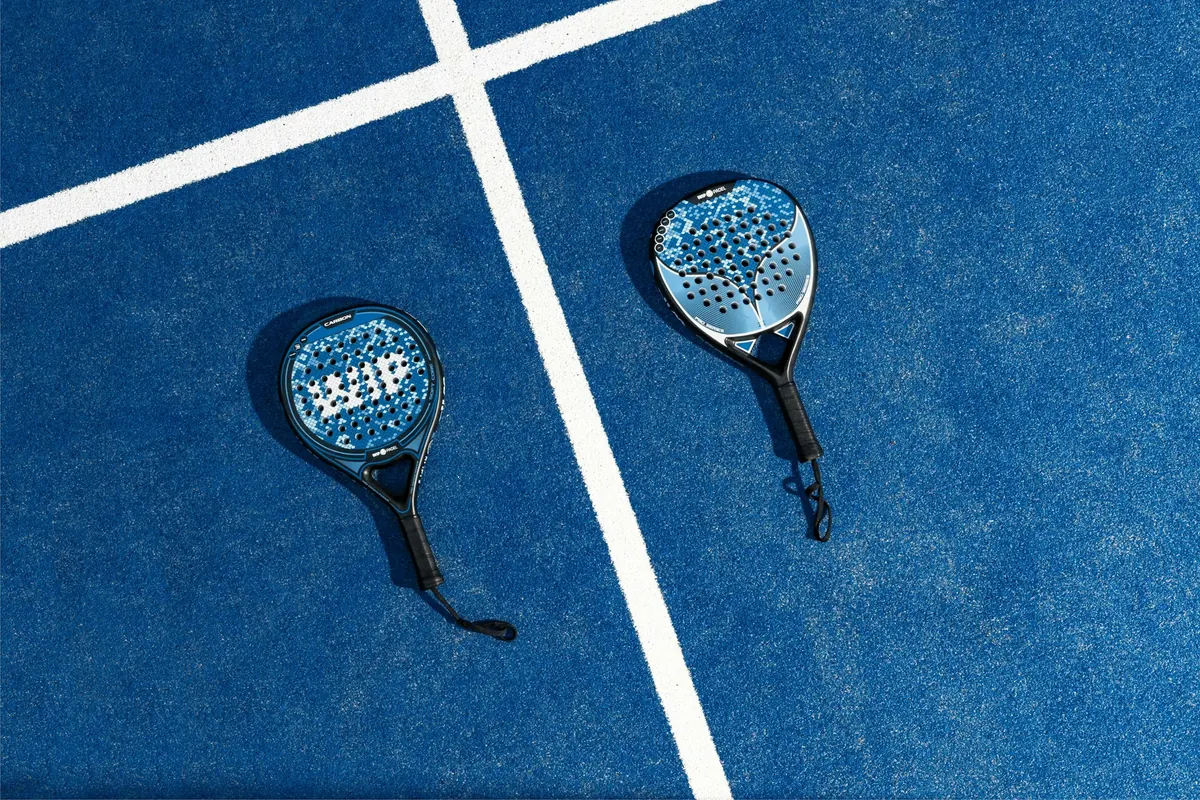
Walk into any padel shop and the first thing you notice is the outline of the rackets: some look like a circle, some like a drop of water, some like an inverted triangle. That outline is not decoration. Shape decides where the weight sits, where the sweet spot is and how much the racket forgives a mishit — which makes it the single most important choice when you buy a racket.
Already know your shape? Filter 1,700+ models by shape in our Padel Racket Finder.
The three shapes at a glance
| Round | Teardrop | Diamond | |
|---|---|---|---|
| Balance | Low (towards the handle) | Medium | High (towards the head) |
| Sweet spot | Large, central-low | Medium, central | Small, high on the face |
| Control | ★★★★★ | ★★★★ | ★★ |
| Power | ★★ | ★★★★ | ★★★★★ |
| Manoeuvrability | ★★★★★ | ★★★★ | ★★★ |
| Arm comfort | High | Medium | Lower |
| Best for | Beginners, defenders, control players | Intermediate all-rounders | Advanced attackers |
Round rackets: control and forgiveness
A round racket keeps most of its mass close to your hand. The result is a low balance, which makes the racket feel light and quick even when it is not, and a large sweet spot in the middle of the face. Balls hit a little off-centre still travel with decent pace and direction.
- Strengths: easy to control, quick at the net, forgiving, gentle on the elbow and shoulder.
- Weaknesses: less "free" power on smashes; you have to generate pace with your swing.
- Choose it if: you are starting out, play mostly from the back of the court, or have had arm problems.
Teardrop rackets: the all-rounder
The teardrop sits between the two other shapes. The head widens slightly towards the top, so the balance moves up a little and the sweet spot is centred on the face. You get noticeably more power than with a round racket without losing much control.
- Strengths: versatile — good in defence, good enough in attack; suits both sides of the court.
- Weaknesses: not the best at anything: a pure defender may prefer round, a pure hitter diamond.
- Choose it if: you play regularly, are comfortable with the walls and want to start finishing points at the net.
Diamond rackets: power first
A diamond racket is widest near the top of the head, which pushes the balance towards the tip. That extra mass in the head adds momentum to smashes, víboras and fast volleys — but the sweet spot is smaller and sits higher on the face, so off-centre hits lose more pace and send more vibration down the handle.
- Strengths: maximum power on overheads; ideal for finishing points.
- Weaknesses: less control, slower to move at the net, more demanding on the arm.
- Choose it if: you have solid technique, play on the left side as the finisher, and hit a lot of overheads.
Common mistake: buying a diamond because the best players use one. A racket that is too demanding makes every defensive shot harder — and in padel most points are won by the team that makes fewer errors.
Shape is only half the story
Shape sets the general character, but three other things change how a racket plays:
- Balance: manufacturers can build a "teardrop" that is quite head-heavy, or a round racket with a medium balance. Always check the balance listed in the specs.
- Core hardness: a soft core adds easy power and comfort to any shape; a hard core adds precision. More in padel racket materials explained.
- Weight: a light diamond can feel easier than a heavy teardrop. See weight ranges in how to choose a padel racket.
Which shape for which player?
| Your profile | Recommended shape |
|---|---|
| First year of padel | Round |
| Coming from tennis, still learning the walls | Round or teardrop |
| Intermediate, plays 2+ times a week | Teardrop |
| Right-side player who builds points | Round or teardrop |
| Left-side attacker with a strong smash | Diamond or high-balance teardrop |
| Elbow or shoulder problems | Round, low balance, soft core |
How to test a shape before you buy
- Borrow or rent: many clubs rent rackets; try one of each shape in the same week.
- Test overheads and volleys: the difference between shapes is most obvious at the net.
- Notice your mishits: if balls die off the racket when you are late, the sweet spot is too small for you.
Not sure where to start? Answer five questions in our find-my-racket quiz, or browse the best round, teardrop and diamond rackets. Our free Padel Rackets app lets you compare models side by side — Android · iPhone.
Frequently asked questions
Which padel racket shape is best for beginners?
Round. The weight sits close to the hand and the sweet spot is large and low on the face, so off-centre hits still go where you aim. Most coaches recommend a round racket for at least the first year.
Is a diamond padel racket more powerful?
Yes, for players who hit the ball cleanly. The head-heavy balance adds momentum on smashes and volleys. But the sweet spot is smaller and higher, so mishits lose more power than with a round racket.
What is the difference between teardrop and diamond?
A teardrop is a compromise: slightly wider at the top than a round racket, with a medium balance. A diamond is wider still at the top and clearly head-heavy. Teardrops are more forgiving; diamonds are more explosive.
Do professional padel players use diamond rackets?
Many attacking players on the left side of the court use diamond or high-balance teardrop rackets, while many right-side and defensive players use teardrops or round rackets. There is no single 'pro' shape.