
Every padel racket is a sandwich: two faces glued over a core, wrapped in a frame. The spec sheet lists the materials of each layer — "18K carbon", "MultiEVA", "soft foam" — and together they decide whether a racket feels lively or solid, forgiving or precise, gentle or harsh on your arm.
Here is what each term means, and which combination suits you. To filter rackets by face material, use our Padel Racket Finder or see the best carbon and fibreglass rackets.
The faces: fibreglass vs carbon
The faces are the hitting surfaces. Their stiffness changes how much the face flexes on impact and how quickly the ball leaves it.
| Fibreglass | Carbon | |
|---|---|---|
| Stiffness | Flexible | Stiff |
| Ball exit at slow speed | High — easy depth | Lower — you supply the pace |
| Control at high speed | Good | Very good |
| Vibration / comfort | Comfortable | Firmer |
| Durability | Good | Very good |
| Typical price | Lower | Higher |
| Best for | Beginners, comfort seekers | Intermediate and advanced players |
Many rackets mix the two — for example fibreglass with a carbon layer — to combine comfort and precision. Some premium models add materials such as aluminised fibreglass or basalt to tune feel and vibration.
3K, 12K, 18K, 24K: what the "K" means
Carbon fabric is woven from strands made of thousands of tiny filaments. 3K means 3,000 filaments per strand, 12K means 12,000, and so on. Higher numbers make a denser weave that is usually stiffer and more rigid.
- 3K carbon: the most common carbon face; a good balance of feel, touch and stiffness.
- 12K carbon: firmer and more precise; popular on intermediate–advanced power rackets.
- 18K and 24K carbon: very rigid faces aimed at hard hitters; they give a solid, precise response but transmit more vibration.
Don't chase the biggest number. A higher K is a marketing headline, not a quality grade. Resin, number of layers and the core all change the final feel — an 18K racket with a soft core can feel more comfortable than a 3K racket with a hard core.
The core: EVA vs foam
The core is the thick rubber layer between the faces. It absorbs and returns the energy of the ball, so it controls the racket's feel — what manufacturers call soft, medium or hard.
EVA rubber
EVA (ethylene-vinyl acetate) is the most common core. It is dense, durable and comes in different hardnesses:
- Soft EVA: more ball exit and comfort; easier at low speed.
- Medium EVA: the all-round choice.
- Hard EVA: maximum control and response on fast shots, but needs a quick swing and is firmer on the arm.
Foam
Foam cores are lighter and softer. They give a trampoline effect that sends the ball deep with little effort and absorbs vibration well — ideal for beginners and comfort. The trade-off: less precision on hard shots, and foam can lose its liveliness sooner than EVA.
Mixed cores
Some rackets combine EVA and foam, or layer EVA of different densities (often sold under names such as "MultiEVA" or "Black EVA"), to blend control and comfort.
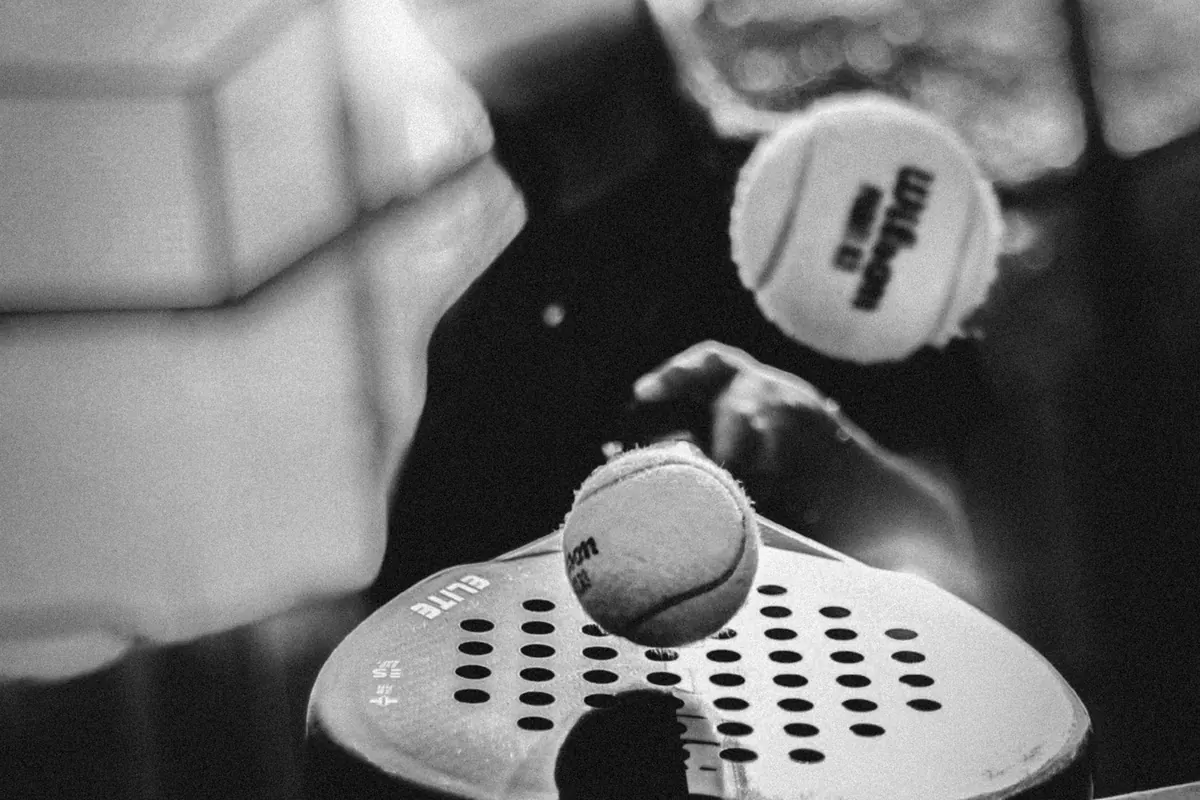
The frame and the surface
- Frame: usually a tubular carbon or fibreglass frame. A stiffer frame adds stability on off-centre hits; some brands add reinforcements at the throat or in the head.
- Rough surface: many faces have a sanded or 3D texture that grips the ball for more spin on slices, bandejas and víboras.
- Holes: the perforations reduce air resistance and weight; their pattern and size subtly affect the sweet spot.
Which combination suits you?
| Player | Faces | Core |
|---|---|---|
| Beginner | Fibreglass | Soft EVA or foam |
| Arm or elbow problems | Fibreglass or 3K carbon | Soft EVA or foam |
| Intermediate all-rounder | 3K or 12K carbon | Medium EVA |
| Advanced attacker | 12K–18K carbon | Medium-hard or hard EVA |
| Advanced control player | 3K–12K carbon | Medium EVA |
Temperature changes the feel
Rubber cores react to temperature: in cold weather the same racket feels harder and less lively, in heat it feels softer and more powerful. If you play outdoors in winter, a slightly softer racket can help.
Ready to compare? Combine materials with the right shape in round vs teardrop vs diamond, take the find-my-racket quiz, or compare specs in our free Padel Rackets app — Android · iPhone.
Frequently asked questions
Is carbon or fibreglass better for a padel racket?
Neither is better for everyone. Fibreglass faces are more flexible, so the ball comes off with less effort and less vibration — ideal for beginners and comfort. Carbon faces are stiffer and more precise, rewarding players with a fast, clean swing.
What does 3K, 12K or 18K carbon mean?
The number tells you how many thousand carbon filaments are bundled in each strand of the weave. Higher numbers usually mean a stiffer, more rigid face, but the final feel depends on resin, layers and the core. 18K is not automatically better than 3K.
What is the difference between EVA and foam cores?
EVA is a dense rubber that keeps its properties for longer and gives control; it comes in soft, medium and hard versions. Foam is lighter and softer, giving more ball exit at low speed and more comfort, but it can lose its liveliness sooner.
Does a hard padel racket give more power?
Only at high swing speeds. A hard core returns energy efficiently when you hit hard, such as on smashes. At slow speeds — blocks, lobs and defence — a soft racket gives more depth with less effort.