
Padel is the fastest-growing racket sport in the world for a simple reason: it is fun from the very first session. The court is small, the serve is easy and the glass walls keep the ball in play. Here is everything you need to go from "never played" to enjoying your first match.
Step 1: Find a court and three other players
Padel is played in pairs, so you need four people. Courts are usually booked in slots of 60 or 90 minutes and the price is shared between the four players.
- Booking apps: many clubs use apps where you can book a court or join an open match at your level.
- Beginner sessions: clubs often run introduction classes or social "Americano" sessions where you rotate partners.
- Lessons: a group lesson is the quickest way to learn the walls and positioning.
Step 2: What to wear and bring
| Item | What you need | Buy or borrow? |
|---|---|---|
| Racket | A round, forgiving racket | Rent for the first sessions |
| Shoes | Herringbone or omni sole for sandy artificial grass | Buy early — running shoes slip and risk ankle injuries |
| Balls | Padel balls (lower pressure than tennis balls) | Often supplied or sold at the club |
| Clothes | Light sports clothing | What you already have |
| Extras | Water, a towel, an overgrip | Optional |
More detail in our guides to padel shoes and padel balls.
Step 3: The five rules to know before you play
- Serve underhand, after one bounce, below waist height, diagonally into the opponent's service box.
- The ball must bounce on the ground first on the opponents' side before touching any wall.
- After that bounce, the walls are in play — you can let the ball come off the glass and then hit it.
- You can use your own walls to get the ball back, as long as it then goes over the net.
- Scoring is like tennis — 15, 30, 40, game — often with a golden point at deuce.
Full details in padel rules explained and padel scoring explained.
Step 4: Basic positioning
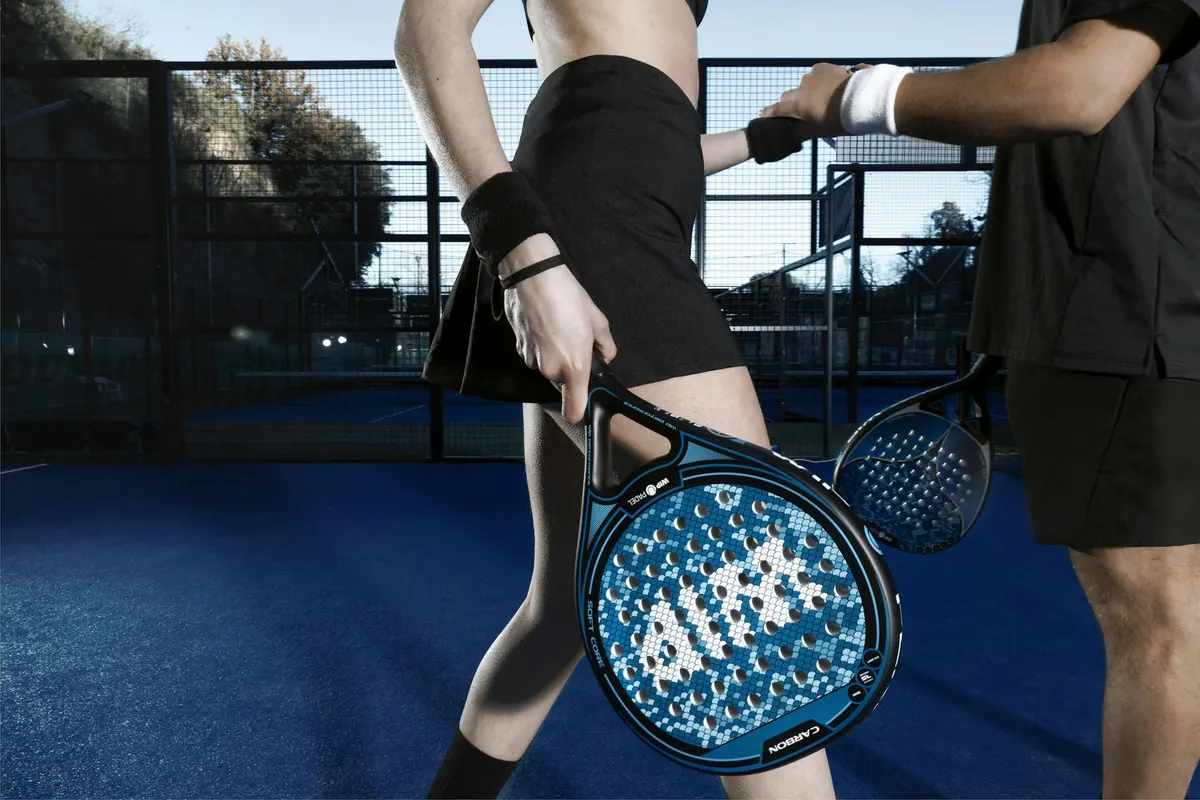
- Two zones: either both players at the net (attacking) or both at the back (defending). Avoid the "no man's land" around the service line.
- Move together: when your partner goes forward, you go forward; when one of you is lobbed, both go back.
- Cover the middle: most balls are aimed between the two players. Agree beforehand who takes them — usually the player with the forehand in the middle.
- Sides: the right-side player usually builds the point; the left-side player (often the stronger overhead) finishes it.
Step 5: The shots to learn first
- Compact forehand and backhand from the back.
- Letting the ball come off the back glass before hitting it.
- The lob, to send the opponents back and take the net.
- Controlled volleys at the net.
- The bandeja, to stay at the net when lobbed.
See them all in padel shots explained.
Padel etiquette
- Wait for the previous game to finish before entering the court, and close the door.
- Start and finish on time — the next group is waiting.
- Call your own side's balls honestly; "let" if a ball from another court interrupts play.
- Don't walk behind a court during a point.
- Shake hands or tap rackets at the end, and help collect the balls.
Coming from tennis? Shorten your swing and stop trying to hit winners from the back. Read padel for tennis players for the ten adjustments that matter most.
Step 6: Buy your first racket
Once you play every week, a racket of your own makes a real difference. For your first one, choose a round shape, low balance, soft core and fibreglass or 3K faces — forgiving, comfortable and easy to control. Start with how to choose a padel racket, see the best padel rackets for beginners, or answer five questions in our find-my-racket quiz.
Our free Padel Rackets app compares 1,700+ models with prices — Android · iPhone.
Frequently asked questions
Is padel easy for beginners?
Padel is one of the easiest racket sports to start. The court is small, the serve is underhand and the walls keep rallies going, so most beginners enjoy long rallies in their very first session.
How many people do you need to play padel?
Padel is almost always played as doubles, so you need four players. Some clubs have narrower single courts, but they are rare. Club apps and social groups make it easy to find three other players of your level.
What do I need for my first padel game?
Comfortable sports clothes, court shoes with a herringbone or omni sole, water, and a racket — which most clubs rent. Balls are often supplied or sold at the club.
How long does it take to get good at padel?
Most people rally comfortably after one or two sessions. Using the walls confidently and playing tactically as a pair usually takes several months of regular play; a few lessons speed this up a lot.